Reverse Total Shoulder Arthroplasty for Fracture in Florida Joint & Spine Institute, PA
A severe shoulder fracture can significantly impact your mobility, independence, and quality of life. At Florida Joint & Spine Institute, FL, our orthopedic shoulder specialists provide advanced treatment options, including reverse total shoulder arthroplasty for fracture, to help restore shoulder function and reduce pain following complex shoulder injuries. This specialized shoulder replacement procedure is often recommended for patients with severe proximal humerus fractures, poor bone quality, or rotator cuff damage that makes traditional reconstruction less effective. Patients throughout Sebring, Winter Haven, and surrounding Central Florida communities trust our experienced orthopedic team for personalized fracture care and comprehensive recovery support.
What is Reverse Total Shoulder Arthroplasty for Fracture?
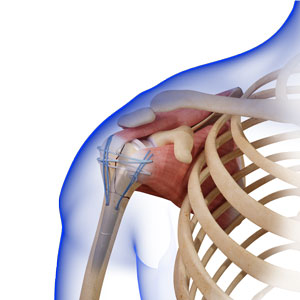
Reverse total shoulder arthroplasty is a type of shoulder replacement surgery in which the normal ball-and-socket structure of the shoulder joint is reversed. The glenoid (shoulder socket) is fitted with a prosthetic ball, while the humerus (upper arm bone) is fitted with a prosthetic socket. This reversal changes the mechanics of the joint, relying on the deltoid muscle rather than the damaged rotator cuff for shoulder movement.
Reverse total shoulder arthroplasty for fracture is a surgical procedure designed to address severe shoulder fractures, particularly those involving the proximal humerus, or cases with compromised rotator cuff function. It replaces the damaged shoulder joint with a prosthetic system that reverses the natural ball-and-socket arrangement, enabling the deltoid muscle to compensate for the lack of rotator cuff stability. The deltoid muscle forms the outer layer of the rotator cuff and is the largest and strongest muscle of the shoulder joint. The rotator cuff is a group of four tendons that join the head of the humerus to the deeper shoulder muscles to provide stability and mobility to the shoulder joint.
What are the Indications for Reverse Total Shoulder Arthroplasty for Fracture?
Reverse total shoulder arthroplasty for fracture is typically indicated for complex proximal humerus fractures that are difficult to reconstruct, especially in elderly patients with poor bone quality. It can also be used for individuals who have had poor results from other treatments, such as open reduction and internal fixation or hemiarthroplasty.
What Does Preparation for Reverse Total Shoulder Arthroplasty for Fracture Involve?
In general, preparation for reverse total shoulder arthroplasty for fracture may include the following steps:
- A comprehensive medical evaluation, including a review of your medical history, physical examination, and laboratory studies such as blood testing to assess the patient’s suitability for the procedure.
- Imaging studies such as X-rays, CT scans, or MRIs are used to evaluate the fracture pattern, bone quality, and rotator cuff condition. A prosthetic system suitable for the patient’s anatomy and fracture type is selected.
- Informing your doctor of any allergies to medications, anesthesia, or latex
- Providing your physician with a list of any medications or supplements you are taking
- You may need to adjust or temporarily stop taking certain medications - especially those that can affect blood clotting
- Stopping smoking, as it can negatively impact the healing process and increase the risk of complications
- Abstaining from food or drink for at least 8 hours prior to surgery
What is the Procedure for Reverse Total Shoulder Arthroplasty for Fracture?
In general, the procedure for reverse total shoulder arthroplasty for fracture may include the following steps:
- The patient is given general anesthesia or regional anesthesia with sedation.
- The patient is typically positioned in a beach chair position to provide optimal access to the shoulder.
- An incision is made over the affected shoulder to expose the shoulder joint.
- The fractured humeral head and any loose bone fragments are removed.
- Damaged cartilage on the glenoid (socket part of the shoulder joint) is prepared for implant placement.
- A baseplate is securely attached to the glenoid using screws or other fixation devices.
- A metal ball (glenosphere) is attached to this baseplate, effectively reversing the shoulder anatomy.
- The humerus (upper arm bone) is prepared by hollowing out the shaft to accommodate the humeral stem.
- A plastic cup (humeral socket) is fixed onto the humeral stem, creating a new socket for the reversed configuration.
- The components are assembled to ensure proper alignment and stability.
- If possible, remaining rotator cuff tendons or other stabilizing structures are repaired or reattached to the prosthesis to optimize joint function.
- The incision is closed with sutures or staples, and a sterile dressing is applied.
What Does Post-Procedure Care for Reverse Total Shoulder Arthroplasty for Fracture Involve?
After the procedure, the arm is immobilized in a sling for 4–6 weeks to allow initial healing, and movements are restricted during this period to prevent stress on the surgical site. Pain is managed with prescribed medications and, in some cases, regional nerve blocks. Wound care includes keeping the incision clean and dry, with follow-up visits for suture removal and monitoring for signs of infection. Physical therapy begins with passive range-of-motion exercises in the first 6 weeks to prevent stiffness, transitioning to active motion and strengthening exercises over the next several months. Full recovery typically takes 6–12 months, with regular follow-ups to ensure proper healing and prosthesis function. Patients are advised to avoid heavy lifting and high-impact activities to protect the shoulder long-term.
What are the Risks and Complications of Reverse Total Shoulder Arthroplasty for Fracture?
While reverse total shoulder arthroplasty for a fracture is generally effective, it carries certain risks and potential complications. These include:
- Infection
- Prosthetic loosening or failure
- Nerve or vascular injury
- Reduced range of motion compared to a healthy shoulder
- Hematoma (accumulation of blood around the joint)
- Blood clots or deep vein thrombosis (DVT)
- Chronic pain
Why Choose Florida Joint & Spine Institute, PA for Reverse Total Shoulder Arthroplasty for Fracture?
Florida Joint & Spine Institute, PA offers comprehensive orthopedic care for patients with complex shoulder fractures and advanced shoulder conditions. Our specialists combine extensive experience, advanced imaging technology, and modern shoulder replacement techniques to create individualized treatment plans tailored to each patient’s needs. We focus on restoring mobility, reducing pain, and helping patients regain independence through expert surgical care and structured rehabilitation programs. From initial evaluation through recovery, Florida Joint & Spine Institute, PA is committed to providing compassionate, patient-centered orthopedic care close to home.
Reverse Total Shoulder Arthroplasty for Fracture FAQs
What is reverse total shoulder arthroplasty for fracture?
Reverse total shoulder arthroplasty is a specialized shoulder replacement procedure that reverses the normal ball-and-socket structure of the shoulder joint. It is commonly used to treat complex shoulder fractures, particularly when the rotator cuff is damaged or bone quality is poor.
Who is a candidate for reverse shoulder replacement after a fracture?
This procedure is often recommended for patients with severe proximal humerus fractures, multiple fracture fragments, poor bone quality, rotator cuff dysfunction, or failed previous fracture treatments.
How does reverse shoulder replacement differ from traditional shoulder replacement?
In a reverse shoulder replacement, the ball and socket positions are reversed. This design allows the deltoid muscle to perform much of the work normally done by the rotator cuff, improving shoulder function when the rotator cuff is damaged.
How long does the surgery take?
The procedure typically takes between one and three hours, depending on the complexity of the fracture and the patient's anatomy.
Will I need to wear a sling after surgery?
Yes. Most patients wear a sling for approximately four to six weeks to protect the shoulder and support healing during the initial recovery period.
How long is recovery after reverse total shoulder arthroplasty?
Recovery timelines vary, but most patients participate in rehabilitation for several months. Full recovery and functional improvement may continue for up to 6 to 12 months following surgery.
Will physical therapy be necessary?
Yes. Physical therapy is an essential part of recovery and helps restore range of motion, strength, stability, and overall shoulder function.
What activities can I expect to resume after recovery?
Many patients are able to return to routine daily activities with significantly less pain and improved shoulder function. Your surgeon will provide specific recommendations regarding sports, work, and recreational activities.
What are the risks associated with reverse total shoulder arthroplasty?
Potential risks include infection, blood clots, nerve or blood vessel injury, prosthesis loosening, instability, stiffness, chronic pain, and complications related to anesthesia.
Schedule a Reverse Total Shoulder Arthroplasty Consultation in Florida Joint & Spine Institute, PA
If you have suffered a complex shoulder fracture and are experiencing pain, weakness, or limited shoulder function, the orthopedic specialists at Florida Joint & Spine Institute, PA can help. Contact Florida Joint & Spine Institute, PA today to schedule a consultation and learn whether reverse total shoulder arthroplasty is the right treatment option for your condition. Our experienced orthopedic team proudly serves patients throughout Sebring, Winter Haven, and surrounding Central Florida communities with advanced, personalized shoulder fracture care designed to restore mobility, improve function, and help you return to an active lifestyle.
For more information about our services or to schedule an appointment, call us at or click here to request an appointment online. We’ll respond to you as soon as possible.