Shoulder Arthroscopy in Florida Joint & Spine Institute, PA
If shoulder pain, weakness, stiffness, or instability is limiting your ability to work, exercise, play sports, or perform everyday activities, shoulder arthroscopy may provide an effective minimally invasive treatment solution. At Florida Joint & Spine Institute, PA, our orthopedic specialists utilize advanced arthroscopic techniques to diagnose and treat a wide range of shoulder conditions while minimizing tissue disruption and promoting faster recovery. Patients throughout Sebring, Winter Haven, and surrounding Central Florida communities trust our experienced orthopedic team for comprehensive shoulder care focused on relieving pain, restoring mobility, and helping them return to an active lifestyle.
Shoulder Anatomy
The shoulder joint is made up of a ball and socket joint, where the head of the humerus (upper arm bone) articulates with the socket of the scapula (shoulder blade), which is called the glenoid. The two articulating surfaces of the bones are covered with cartilage, which prevents friction between the moving bones, enabling smooth movement. Tendons and ligaments around the shoulder joint provide strength and stability to the joint.
Disease Overview
Injury and disease to the bones or soft tissues of the shoulder joint can make it unstable, and lead to pain, inflammation and reduced mobility.
What is Shoulder Arthroscopy?
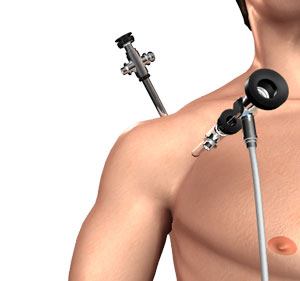
Arthroscopy is a minimally invasive diagnostic and surgical procedure performed for joint problems. Shoulder arthroscopy is performed using a pencil-sized instrument called an arthroscope. The arthroscope consists of a light system and camera that projects images of the surgical site onto a computer screen for your surgeon to clearly view. Arthroscopy is used to treat disease conditions and injuries involving the bones, cartilage, tendons, ligaments, and muscles of the shoulder joint.
Indications of Shoulder Arthroscopy
Shoulder arthroscopy is indicated to treat the following shoulder conditions when conservative treatment such as medication and therapy fails to relieve pain and disability:
- Shoulder impingement
- Rotator cuff tear
- Frozen shoulder or stiffness of the shoulder joint
- Shoulder instability
- Biceps rupture
- Damaged cartilage or ligaments
- Bone spurs or bony projections
- Arthritis of the collarbone
Shoulder Arthroscopy Procedure
Your surgeon performs shoulder arthroscopy under general or regional anesthesia. You may be positioned lying down on your side with your arm propped up or sitting in a semi-seated position. Sterile fluid is injected into the shoulder joint to expand the surgical area, so your surgeon has a clear view of the damage and room to work. A button-sized hole is made in the shoulder and the arthroscope is inserted. Your surgeon can view images captured by the camera in the arthroscope on a large monitor. Surgical instruments are introduced into the joint through separate small holes to remove and repair the damage to the joint. After surgery, the instruments are removed, and the incisions are closed with stitches or small sterile bandage strips.
Postoperative Care for Shoulder Arthroscopy
After the surgery, the small surgical wounds take a few days to heal and the surgical dressing is replaced by simple Band-Aids. The recovery time depends on the type and extent of the problem for which the procedure was performed. Pain medications are prescribed to keep you comfortable. The arm of the affected shoulder is placed in a sling for a short period as recommended by your doctor. Physical therapy is advised to improve shoulder mobility and strength after the surgery.
Advantages of Shoulder Arthroscopy
The advantages of arthroscopy compared to open surgery with a large incision include:
- Less pain
- Fewer complications
- Shorter hospital stays
- Faster recovery
Risks and complications of Shoulder Arthroscopy
Complications of shoulder arthroscopy include infection, bleeding, damage to nearby nerves or blood vessels, or delayed healing after the surgery. In certain cases, a stiffness of the shoulder joint may occur after the surgery. It is important to participate actively in your physical therapy to prevent this from occurring.
Why Choose Florida Joint & Spine Institute, PA for Shoulder Arthroscopy?
Florida Joint & Spine Institute, PA provides comprehensive shoulder care backed by experienced orthopedic specialists who are dedicated to delivering exceptional patient outcomes. Our team utilizes advanced diagnostic imaging, minimally invasive arthroscopic techniques, and individualized treatment plans to address a wide variety of shoulder conditions. From rotator cuff injuries and shoulder impingement to instability and cartilage damage, we offer personalized care designed to restore function and reduce pain. With convenient locations, comprehensive rehabilitation resources, and a patient-centered approach, Florida Joint & Spine Institute, PA provides seamless orthopedic care from diagnosis through recovery.
Shoulder Arthroscopy FAQs
What is shoulder arthroscopy?
Shoulder arthroscopy is a minimally invasive surgical procedure that uses a small camera called an arthroscope and specialized instruments to diagnose and treat problems inside the shoulder joint through small incisions.
What conditions can be treated with shoulder arthroscopy?
Shoulder arthroscopy is commonly used to treat rotator cuff tears, shoulder impingement, shoulder instability, frozen shoulder, biceps tendon injuries, cartilage damage, bone spurs, and certain forms of arthritis.
Is shoulder arthroscopy considered minimally invasive?
Yes. Shoulder arthroscopy requires only small incisions, resulting in less tissue damage, reduced postoperative pain, smaller scars, and a faster recovery compared to many traditional open surgical procedures.
How long does shoulder arthroscopy take?
The procedure typically takes between 30 minutes and 2 hours, depending on the complexity of the condition being treated and whether repairs are required.
Will I need anesthesia for shoulder arthroscopy?
Yes. Shoulder arthroscopy is usually performed under general anesthesia or regional anesthesia to ensure your comfort during the procedure.
How long is recovery after shoulder arthroscopy?
Recovery depends on the specific procedure performed. Some patients return to light activities within a few weeks, while more complex repairs may require several months of rehabilitation.
Will I need physical therapy after surgery?
Yes. Physical therapy is an important part of recovery and helps restore shoulder strength, flexibility, range of motion, and overall function.
What are the benefits of shoulder arthroscopy?
Benefits include smaller incisions, less postoperative pain, faster recovery, reduced risk of complications, shorter hospital stays, and improved visualization of the shoulder joint during surgery.
What are the risks associated with shoulder arthroscopy?
Although complications are uncommon, potential risks include infection, bleeding, nerve or blood vessel injury, stiffness, swelling, blood clots, and delayed healing.
Schedule a Shoulder Arthroscopy Consultation in Florida Joint & Spine Institute, PA
If chronic shoulder pain, weakness, stiffness, or instability is affecting your quality of life, the orthopedic specialists at Florida Joint & Spine Institute, PA can help. Contact Florida Joint & Spine Institute, PA today to schedule a consultation and learn whether shoulder arthroscopy is the right treatment option for your condition. Our experienced orthopedic team proudly serves patients throughout Sebring, Winter Haven, and surrounding Central Florida communities with advanced, personalized shoulder care designed to restore comfort, mobility, strength, and long-term function.
For more information about our services or to schedule an appointment, call us at or click here to request an appointment online. We’ll respond to you as soon as possible.